
Snow rails, guards and the ice that causes the leaks
Retention for metal and shingle roofs across Star Valley and Teton County, fitted to roofs we built and roofs we did not. Most of the calls we get after a heavy snow are about where the snow landed, not about the roof itself.
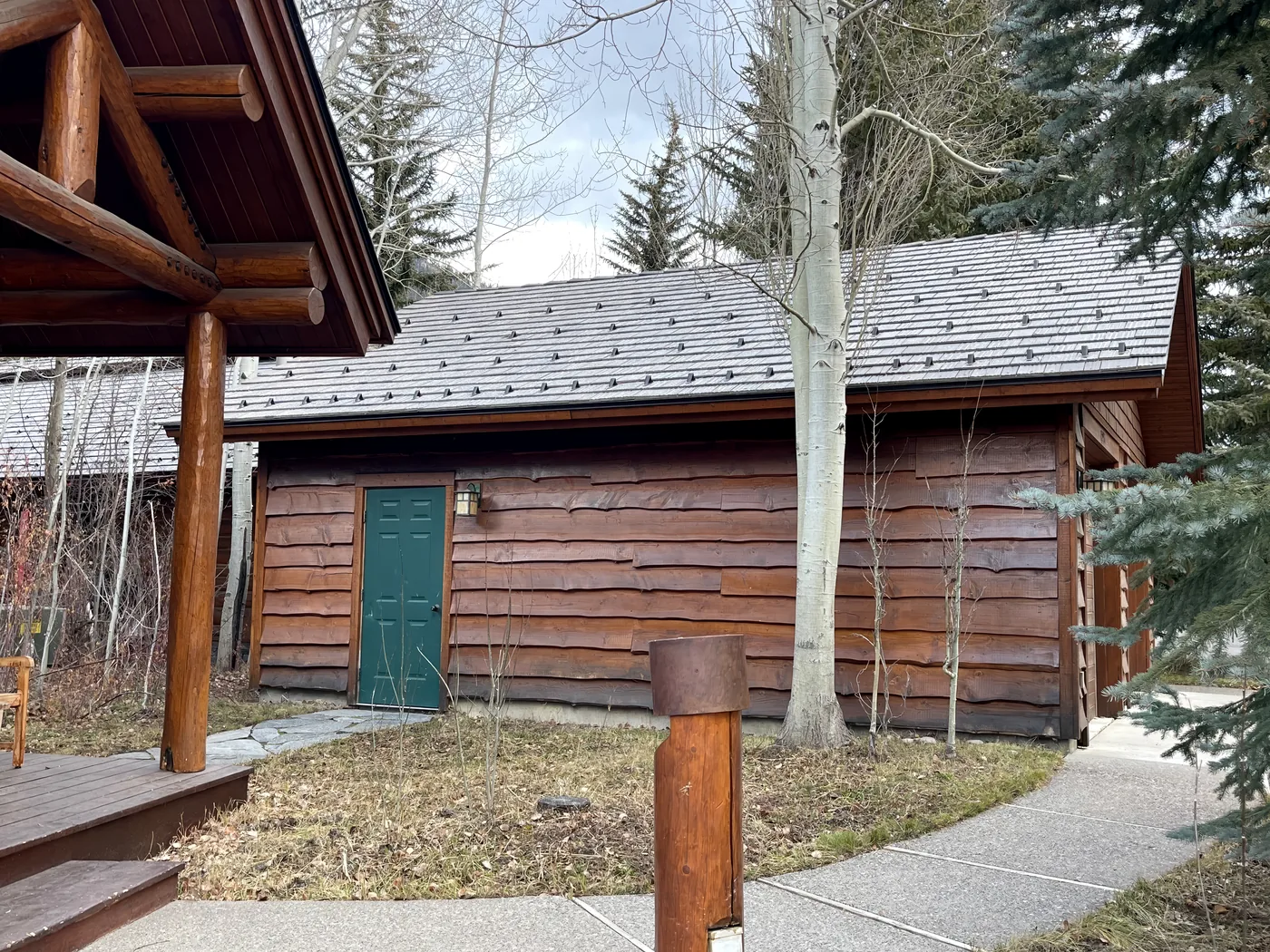
What snow rails actually do
Snow retention helps hold snow on the roof and reduce sudden sliding over people, entrances and property. Its layout must suit the roof and the expected load; a rail is not a guarantee that nothing can fall from an eave.
Pipe rails clamp to standing seam panels without piercing them. On shingle and shake roofs we use pad-style guards that screw into the roof and are flashed like any other penetration.
Where retention belongs
Everywhere a person or a vehicle can be underneath: above the entry you actually use, over walkways and decks, above a driveway, and over the garage doors on a north-facing slope.
Valleys matter too. Two roof planes meeting concentrate snow into one place, and if the outlet is above a doorway, that is where the problem will show up.
Ice dams, and how a roof is built against them
An ice dam is a ridge of ice at the eave. It forms when snow higher on the roof melts because the deck is warm, the water runs down, and it refreezes where the roof edge is cold. Water then backs up behind the ice and finds its way under the covering, which is how most winter leaks start.
The fix is not a bigger shovel. It is a self-adhered ice and water membrane along the eaves and in the valleys, insulation and ventilation that keep the deck cold enough that the melt does not happen, and flashing details that give the water somewhere to go when it does.
Heat cable, and when it helps
Heat cable melts a channel so meltwater has a path off the roof. It is a useful tool in a specific place: a valley that always ices, a north slope that never gets sun, the run above an entry that has to stay clear.
It is not a substitute for the membrane and ventilation, and running it across the whole roof is an expensive way to treat a symptom.
Roofs we did not install
Plenty of our retention work is on roofs someone else built. We measure the panel, match the finish as closely as the supplier allows, and fit the rails so the roof keeps its warranty.
Questions we get about this
How many rows of snow rails does a roof need?
The layout depends on design snow load, roof pitch, eave-to-ridge distance, seam or rib spacing, and the tested capacity of the roof attachment and retention system. Those inputs determine row count, spacing and placement. A measured roof outline helps with dimensions, but neither a satellite picture nor a LiDAR scan establishes the building's structural capacity. We confirm the roof system and use the manufacturer's layout requirements before quoting the installation.
Will rails hold a whole winter of snow?
Only within the design limits of the complete roof and retention system. More snow than the design allows can overload either one. Installing snow guards does not increase a building's structural snow-load rating, and adding a few guards without a suitable layout can overload their attachments.
Can ice dams be fixed without replacing the roof?
Sometimes. If the membrane at the eaves and the ventilation can be corrected at a reroof, that is the moment to do it. On a roof that is otherwise sound, air sealing and insulation work in the attic often does more than anything done to the shingles.
Do you fit rails on shingle roofs as well as metal?
Yes. Pad-style guards on shingle and shake, pipe rails on standing seam and corrugated, and diverters where the snow needs to be pushed away from a specific spot.
How much snow can a roof here hold?
There is no safe valley-wide answer in inches of snow. Check the building's plans and design snow load with the local building department or a qualified structural professional; condition, alterations and drifting also matter. LiDAR measures roof geometry, not framing strength. If the roof or ceiling sags, you hear cracking, or doors suddenly bind during a snow event, leave the affected building and contact local emergency or building officials. Do not climb onto a potentially overloaded roof to inspect it.
What can an ice dam do to the roof deck?
Water trapped behind an ice dam can work under the covering and wet the sheathing, insulation and ceilings. Repeated wetting can damage the deck even when the shingles or panels still look sound. The inspection needs to trace the moisture, check the deck and address warm air leaking from the house into the attic. Air sealing, suitable insulation and ventilation help reduce that heat flow; eave membrane adds protection but does not cure the cause on its own.
Do I need snow guards or heat cable?
They solve different problems. Snow guards and rails help manage sliding snow; heat cable creates a drainage path through ice in selected areas. Neither repairs a leaking flashing or replaces air sealing and insulation. The right choice depends on whether the problem is falling snow, ice-backed water or both, and on a product layout suited to the roof. Heat cable also needs a suitable electrical installation and adds running and maintenance costs.
Send us a photo of the roof and what is underneath it, and we will tell you what it needs.
Get a free bid(307) 885-3084Email a photo to saltriverroofinginc@gmail.com