
Roof replacement in Star Valley
Most roofs we replace in Afton, Thayne, Star Valley Ranch and Alpine come off down to the deck. Here is what that involves, in the order it happens, so the bid makes sense when you read it.
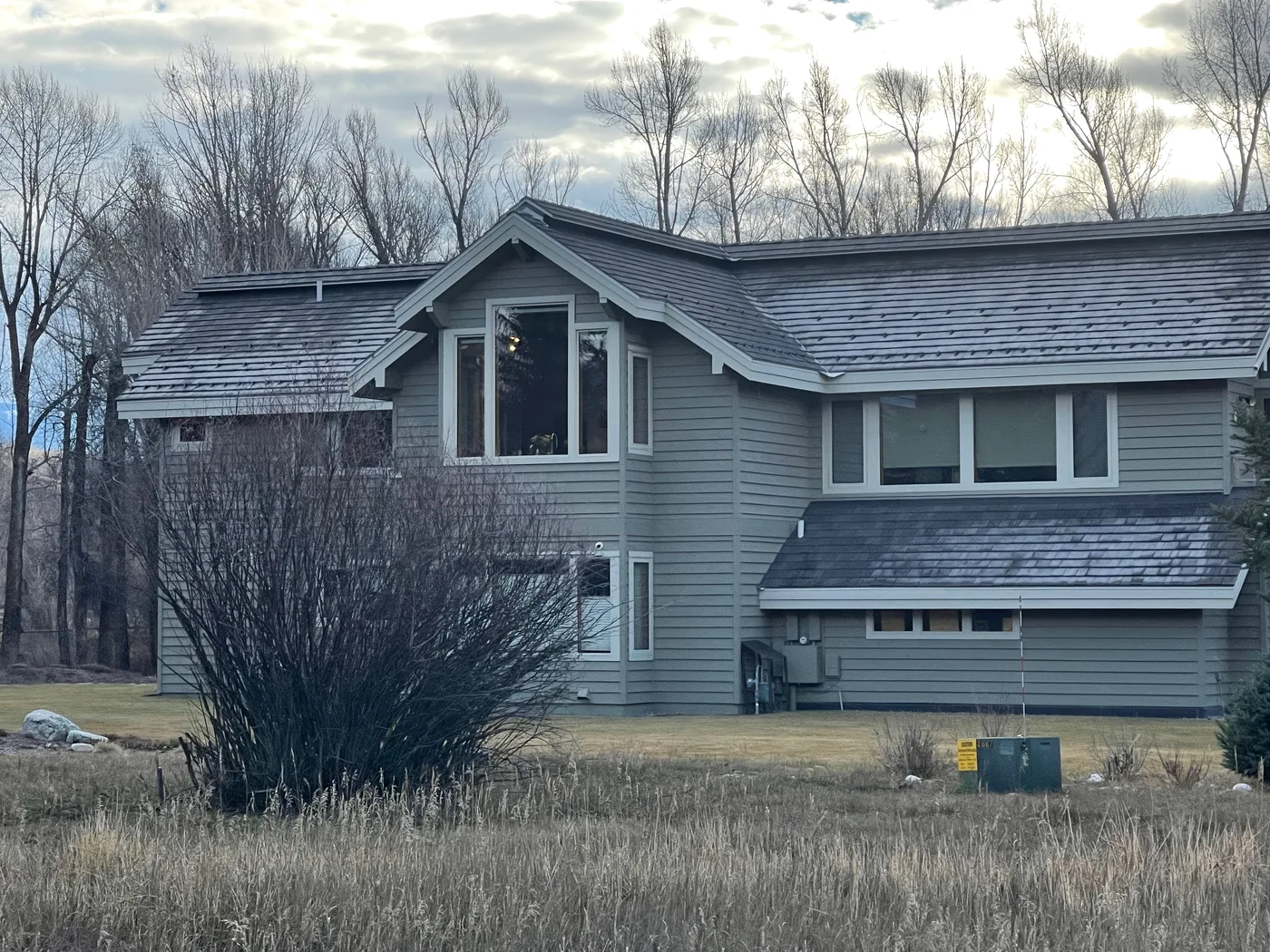
Why we tear off instead of roofing over
A tear-off is the only time anyone sees the deck. Soft or rotted sheathing, old leaks around chimneys and vents, and missing membrane at the eaves all show up once the old covering is gone, and they get fixed before the new roof goes on instead of being sealed in.
The cost estimator asks how many layers are on the roof now because each layer is more to remove and haul away, and that shows up in the price.
What goes back on, from the deck up
Any damaged decking is replaced first. Then a self-adhered ice and water membrane along every eave and valley, where ice dams form, and underlayment across the rest of the deck.
Flashing at walls, chimneys and valleys is bent to fit in our shop in Afton. Ridge venting lets warm attic air out at the peak, which keeps the deck cold and is half of what stops ice dams. Then the roof covering you chose, and snow rails where people walk or park underneath.
Choosing the new roof
Standing seam metal is the common choice in the valley because it sheds snow and lasts decades. Architectural asphalt is the budget route. Synthetic slate, synthetic shake and cedar shake are there if the look matters most.
As a rough regional planning range, full replacements run from about $5.50 per square foot of roof for asphalt to around $22 for cedar shake, installed. That range is for planning, not our price list; your written bid replaces it with a real number.
What a written bid covers
After a free visit, the bid lists the roof, the materials, the tear-off and the details such as flashing, venting and snow rails, so you can compare it line by line with anyone else's.
Questions we get about this
How do I know my roof needs replacing rather than repairing?
Leaks in more than one place, soft spots underfoot, shingles losing granules or curling, and repeated ice dams at the same eave all point toward replacement. A single leak at a flashing often does not. We will tell you which one we see.
Can a roof be replaced in winter here?
Metal and some other roofs can go on in cold weather, but snow and short days slow everything down and some materials need warmth to seal. Most replacements are scheduled between spring and fall, so call early if you want a summer slot.
Do I need to be home while the roof is replaced?
No, but it helps if someone can be reached during the job, and cars should be out of the driveway and garage while the old roof comes off.
Will insurance pay for a new roof?
Coverage depends on the cause of damage and your policy; the insurer makes that decision. Ask about wind or hail deductibles, cosmetic-damage exclusions, and whether the roof is covered at replacement cost or actual cash value, which can subtract depreciation. Our inspection photographs and written scope can help document the condition, but an estimate is not a coverage decision or a promise that insurance will pay for a new roof.